How to Store Silver Jewelry to Prevent Tarnish
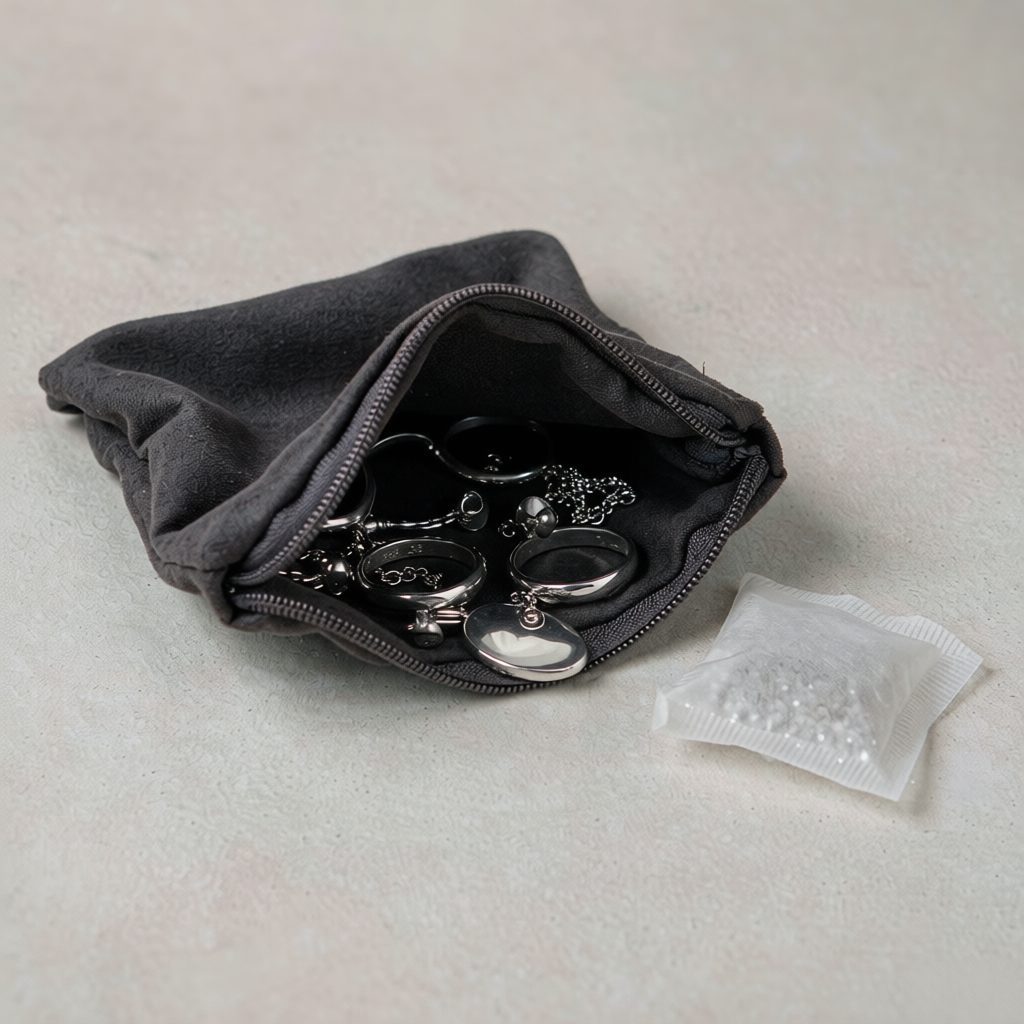
Tarnish is not damage — it is silver reacting with sulfur in the air. The good news: most tarnish is preventable at the storage stage. Whether you hold one favorite piece or a 100-style retail inventory, the same handful of rules keeps 925 silver bright between wears. 925 silver contains 7.5% alloy (usually copper) that reacts with hydrogen sulfide gas — present in air, rubber, wool, and some cosmetics — to form a dark surface layer. Humidity speeds it up. Storage is not about hiding jewelry; it is about controlling air, moisture, and contact. Use anti-tarnish bags or zip pouches. Less air contact means slower reaction. Add silica gel or a humidity card; keep storage below 50% RH. Own compartments prevent scratches and stone setting knocks. Keep away from rubber bands, wool, perfumed drawers, bathrooms. A 30-second monthly check catches early tarnish before it sets. For retailers: first-in-first-out keeps slow movers from sitting dull. For brands and retailers, display pieces face more air and light than stored stock. Use anti-tarnish display pads, rotate showcase items weekly, and keep a soft polishing cloth at the counter for quick touch-ups. Pieces that sit in a case for months are the first to dull — a FIFO (first-in-first-out) rotation is the simplest defense. Keep backstock in sealed anti-tarnish bags inside a low-humidity cabinet, with silica gel refreshed quarterly. Rotate stock so slow movers are sold before tarnish sets, and reserve open display for a small, frequently-rotated hero set. Yes. Both work by absorbing moisture or binding sulfur in the enclosed space, and neither touches the metal directly. Replace them on a schedule — strips lose potency after a few months, silica gel once it feels saturated.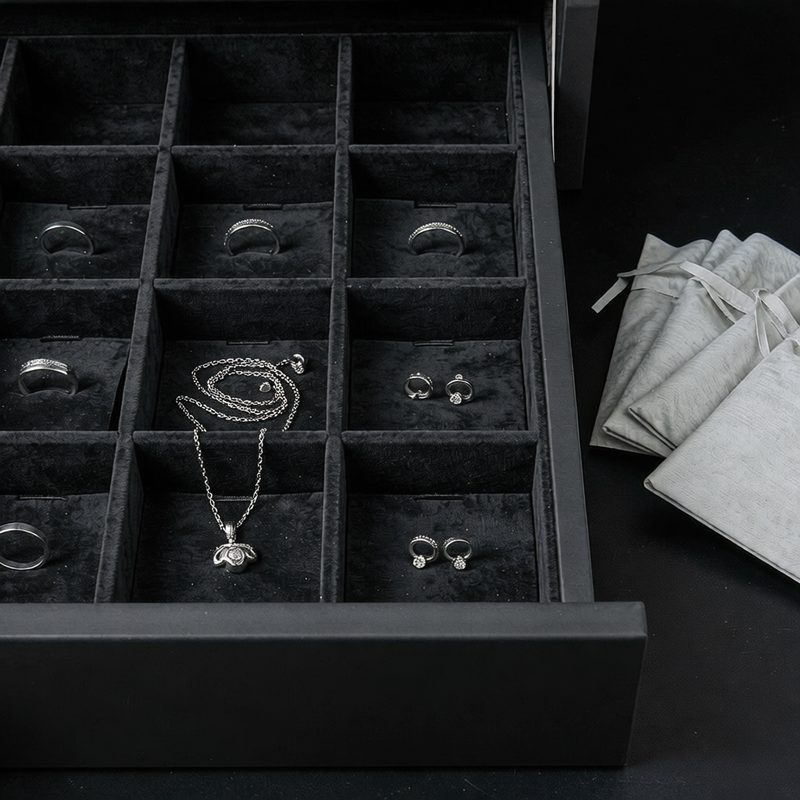
Why silver tarnishes in storage
The 6 rules of anti-tarnish storage
1. Seal it
2. Dry it
3. Separate it
4. Isolate sulfur
5. Inspect it
6. Rotate stock
Retail & display care
Frequently asked
Related reading